
Davra Tafsir
al-Baghawi, Ibn Kathir, al-Tabari — original text, three books for one verse
Three classical commentaries — al-Baghawi's «Ma'alimut-tanzil», Ibn Kathir's «Tafsirul Qur'onil azim», and al-Tabari's «Jomi'ul-bayon» — in the original Arabic text, verse by verse. Qur'an quotations, hadiths (with their grading), narrators, and the author's own markers within the text are automatically highlighted. Tafsir translation is generated by AI only when you request it, paragraph by paragraph — with a warning and teacher review. Download the surahs once, then read them offline.
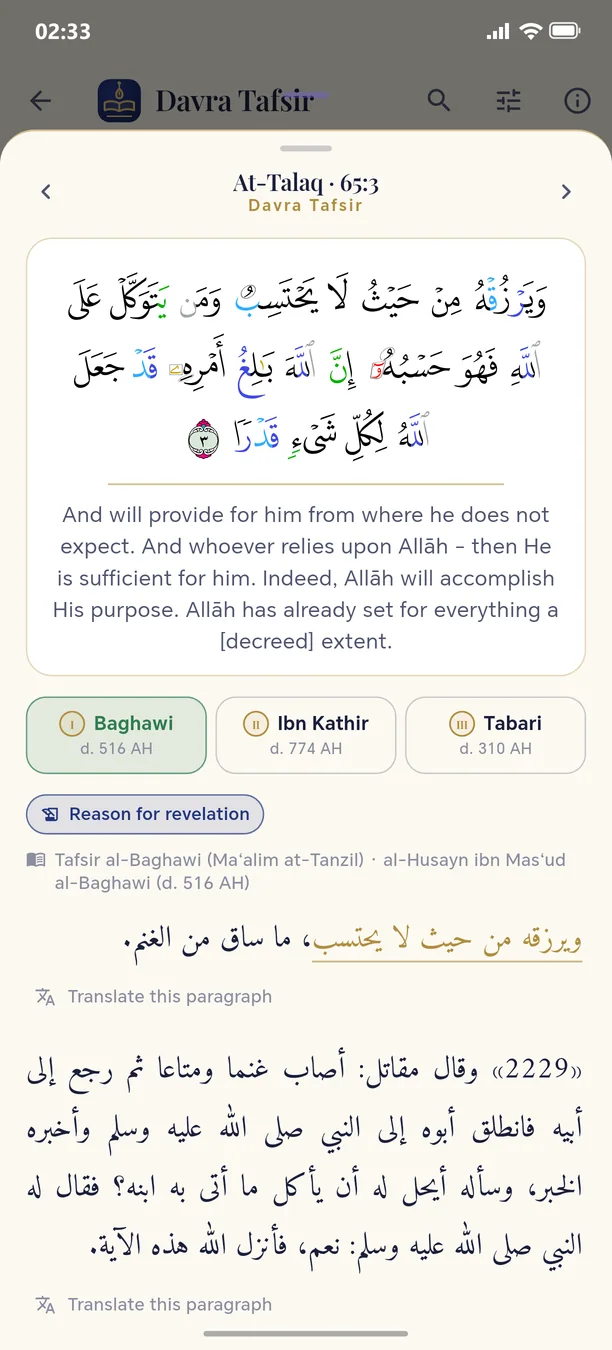
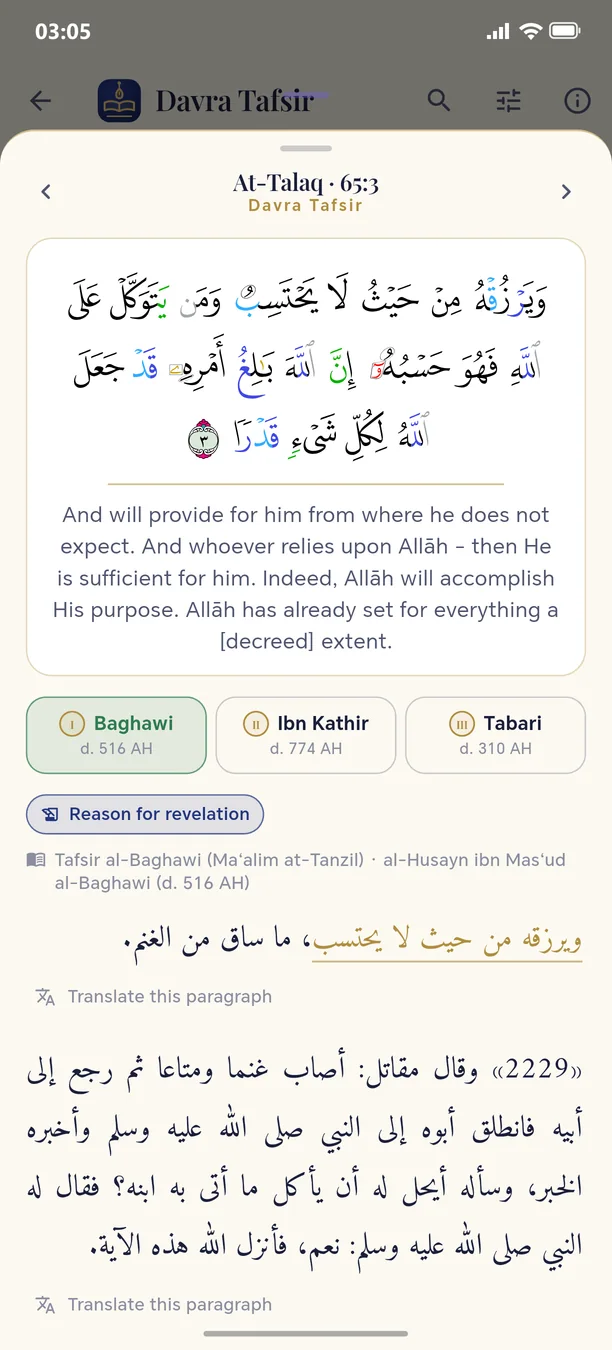
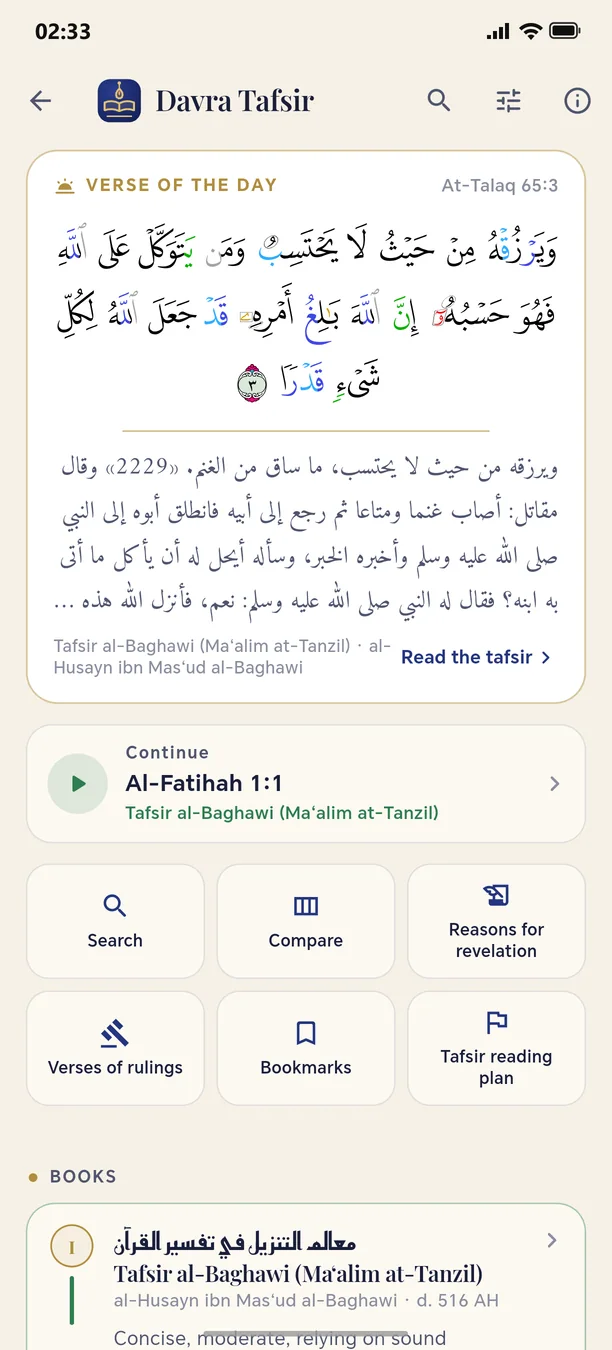
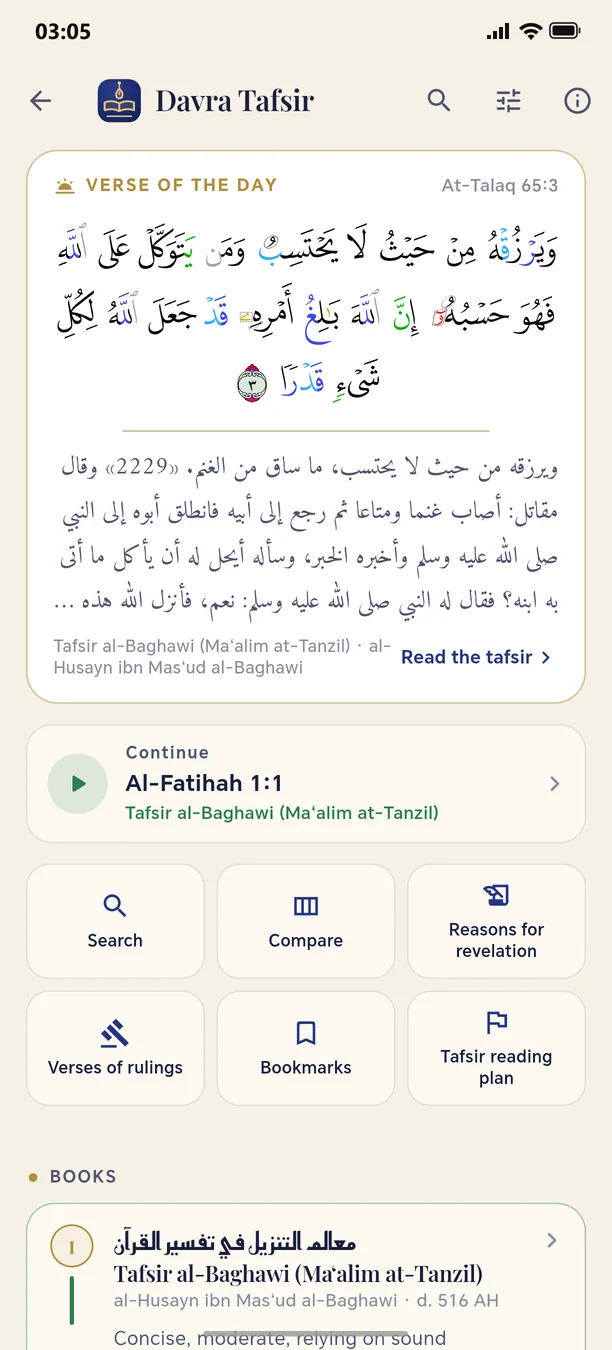
Three books, one verse
Select a verse — three tafsirs side by side.
Three classical tafsirs — in the original textNew
From beginner to scholar level.
More detailsTafsir from the Qur'an with one tapNew
Verse page: verse, translation, and tabs for the three books.
More detailsCompare three books side by sideNew
One verse — the views of three mufassirs on one screen.
More detailsMarked text: verse, hadith, narratorNew
Every source within the tafsir — to its place with one tap.
More detailsTranslation, offline mode, search
Tafsir translation — only when requested; the text is on the device.
Tafsir translation — paragraph by paragraph, with labelsNew
AI translation only when requested, with a warning.
More detailsOffline packages — a surah or an entire book
Download once and read without internet.
More detailsSearch — in downloaded packages
Arabic word, verse key, or surah number.
More detailsTafsir completion, bookmark, comment, note
Divide the book by a deadline, with your progress available on all devices.
More detailsEvery day and everywhere
Chat, voice, bot, widget, web.
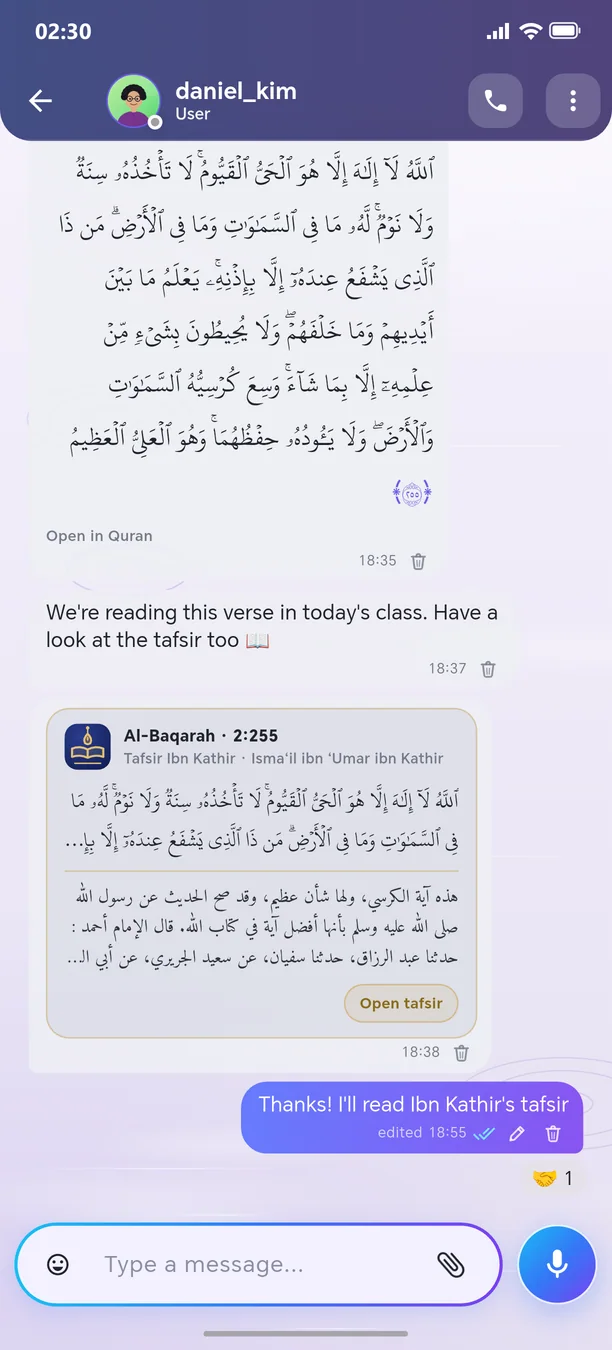
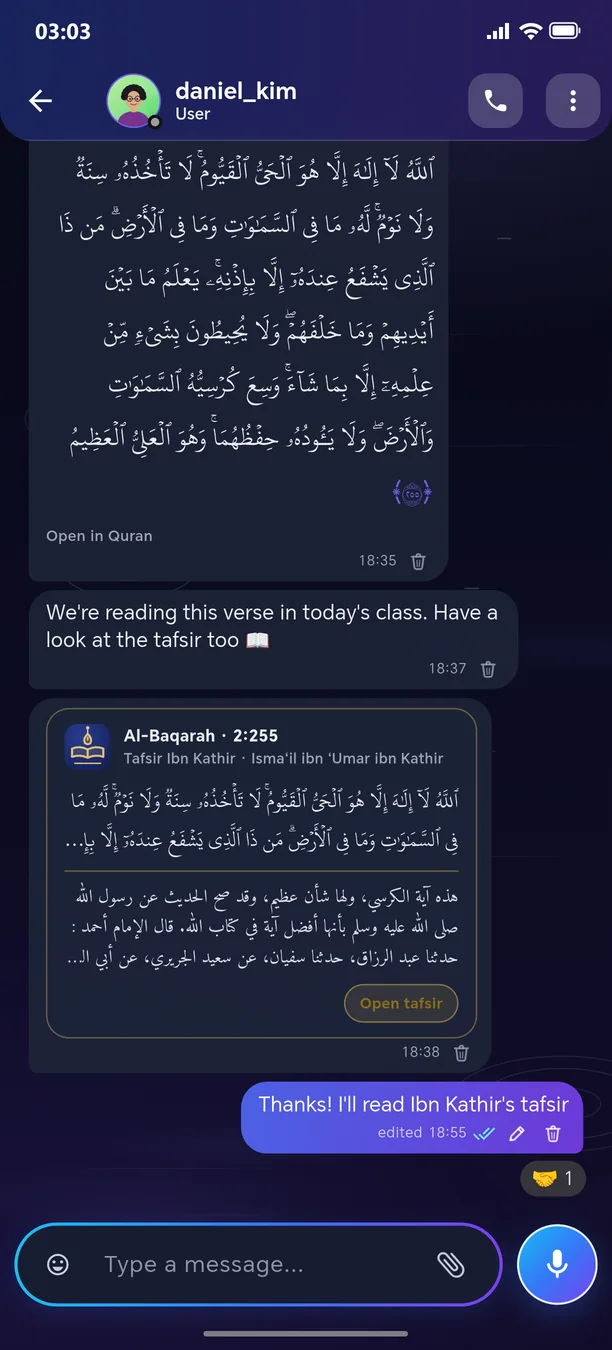
Tafsir card in the chat, linked with Hadith and Majlis
Send the excerpt to the conversation — the recipient opens it in their own language.
More detailsListening and hands-free mode
The tafsir text and its translation are played aloud—the verse itself is only played in the reciter's voice.
More details@DavraTafsirBot
In any chat, @DavraTafsirBot 2:255 — a card.
More detailsWidget, web page, AI agent
The tafsir of the verse of the day on the home screen; davra.online/tafsir/2:255.
More detailsFrequently asked questions
Where was the tafsir text obtained from, and is it reliable?
All three books were taken from digital editions in the OpenITI open corpus (Shamela copies); the edition is specified on the book card. Each surah package is verified against a checksum using a signed list on the server. The tafsir text is never written from memory, a search engine, or artificial intelligence.
Is this a Qur'an translation?
No. What is translated here is the exegete’s own commentary (the tafsir text). Translations of the verses are taken from the verified translations in the Davra Qur’an section, while the hadiths within the tafsir are shown with human translations from the Davra Hadith database. AI does not alter them.
How reliable is AI translation?
AI translation is a draft to help with understanding, not a scholarly source; therefore, it is always shown alongside the original Arabic text and marked «AI translation». Frequently requested passages are added to the teacher’s queue; once a teacher approves one, it receives the «verified» label. If you notice an error, report it via «I found an error».
Will the app warn me if a hadith is weak or is an Isra’iliyyat report?
The app does not issue rulings of its own. The author’s own words («weak», «gharib», «munkar», «from the Isra’iliyyat») are highlighted in the text with colored labels; if a hadith is found in the Davra Hadith database, its grading is shown with a separate seal. The remaining assessment is left to the reader and the teacher.
Does it work without the internet, and how much space does it take?
Yes. Surahs are downloaded as packages—the surah you open is downloaded automatically, and you can also download the entire book. The size is shown on the book card (long surahs are up to 1 MB). Downloaded text, bookmarks, plans, and reading progress work offline; only a new AI translation request requires an internet connection.
Which languages?
Interface, book titles, and explanations in 18 languages. The tafsir text itself is in Arabic; its translation is done paragraph by paragraph into the language you request and stored in the community cache — once a paragraph has been translated into a language, it becomes instantly available to subsequent readers.
Texts: the OpenITI corpus (editions of al-Baghawi, Ibn Kathir, and al-Tabari), under the CC BY-NC-SA 4.0 license; packages are distributed under the same terms. The Qur'an text is from the King Fahd Complex (Hafs). Publication and licensing information is on the “About section” sheet in the app.
Welcome to the next-generation messenger
Free. No ads. Get started in one minute.